
Stopping Water Before It Undermines Pavement
Asphalt Crack Sealing in Elk Grove Village for preventing water infiltration that accelerates pavement deterioration during freeze-thaw cycles
Cracks in asphalt allow water to penetrate beneath the surface and weaken the base layer, which leads to wider cracks, pothole formation, and eventually structural failure that requires costly replacement. Solis Asphalt Paving Inc provides asphalt crack sealing in Elk Grove Village to stop this progression before it compromises the pavement's load-bearing capacity. You notice cracks widening after winter months because water freezes in the gaps, expands, and forces the asphalt apart with each freeze-thaw cycle that occurs throughout late fall and early spring in this region.
Crack sealing involves cleaning debris and vegetation from the crack, preparing the edges to accept sealant, and filling the gap with hot rubberized material that flexes with temperature changes rather than cracking again. This creates a waterproof barrier that prevents moisture from reaching the base layer, where saturation causes aggregate displacement and structural instability.
Arrange an evaluation to identify which cracks require immediate sealing and which indicate deeper structural problems.
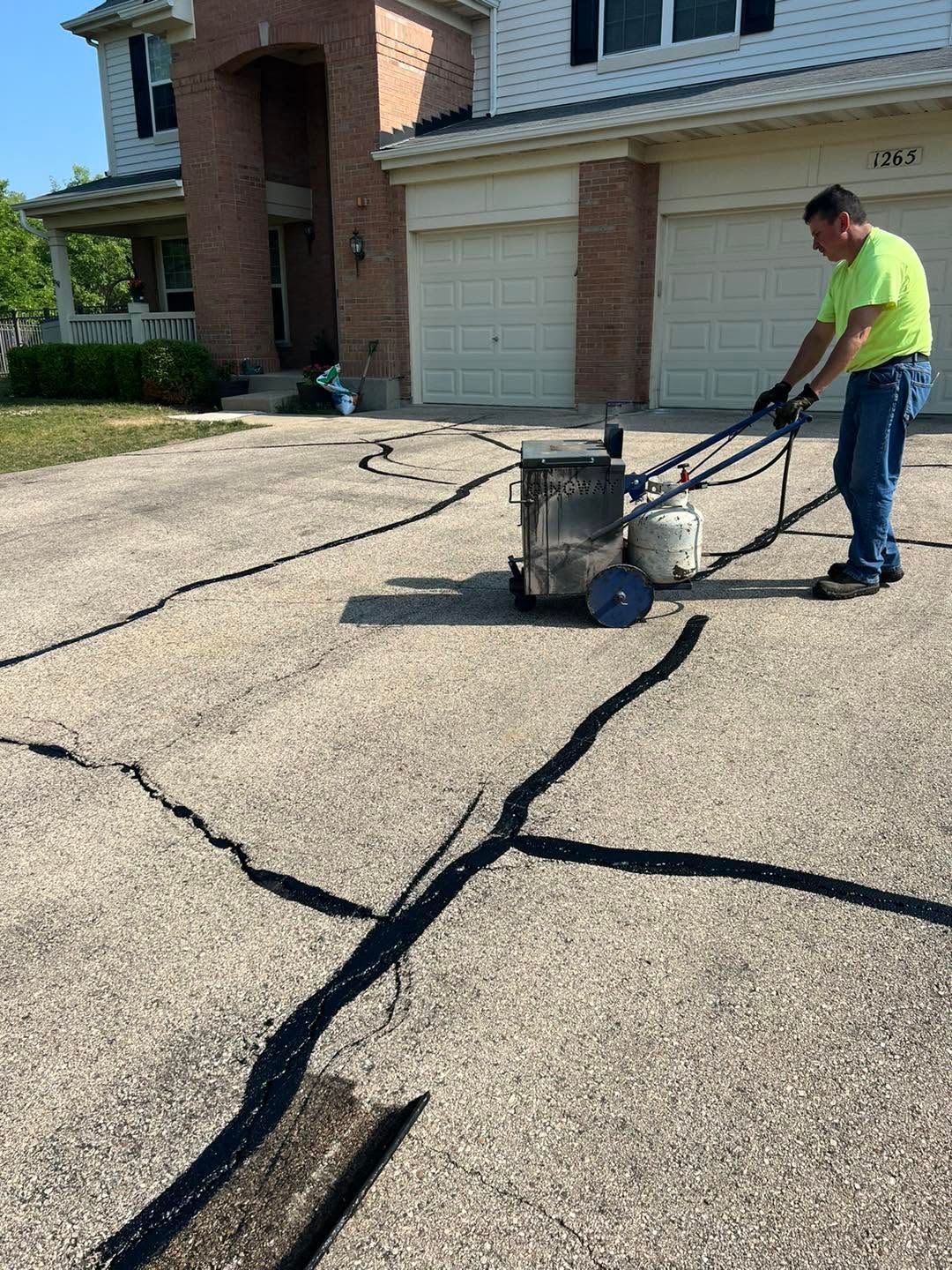
Why Crack Width and Depth Matter
Cracks wider than a quarter inch allow enough water infiltration to saturate the base material, while narrow surface cracks can often wait if they show no signs of widening or branching. The decision to seal depends on whether the crack extends through the full depth of the asphalt or remains confined to the surface layer, which determines how quickly water reaches the vulnerable base beneath.
After sealing, you notice that water runs off the pavement surface instead of pooling in cracks, the sealed areas remain flexible during temperature swings rather than reopening, and adjacent pavement stops developing the branching crack patterns that indicate spreading damage. The sealant prevents the progressive deterioration that starts with a single crack and expands into a network of interconnected failures over two to three winter seasons.
Timing matters because sealant requires dry conditions and temperatures above fifty degrees for proper adhesion and curing. Sealing during wet or cold periods results in poor bonding that allows the material to separate from the crack edges within weeks, negating any protective benefit and requiring the work to be redone under correct conditions.
Answers to Frequent Service Questions
Clients typically want to understand timing, effectiveness, and when crack sealing becomes insufficient for protecting their pavement investment.
How often should asphalt be inspected for cracks that need sealing?
Annual inspections in early spring reveal which cracks developed or widened over winter, allowing you to seal them before the next freeze-thaw season accelerates damage. Waiting more than one season often means cracks that could have been sealed inexpensively now require routing or even patching because water infiltration has already weakened the surrounding pavement.
What is the difference between crack sealing and crack filling?
Crack sealing uses hot rubberized material that remains flexible and bonds to the crack walls, creating a durable seal that moves with the pavement as temperatures change. Crack filling uses cold-pour materials that work for narrow surface cracks but lack the flexibility and adhesion needed for wider structural cracks that experience movement.
Why do some cracks reappear after sealing?
Cracks reopen when the underlying cause has not been addressed, such as ongoing base layer settlement, inadequate drainage that keeps the base saturated, or reflection cracking from joints in an underlying concrete slab. Sealing stops water infiltration but cannot prevent movement caused by structural issues beneath the asphalt.
Can crack sealing extend the life of older asphalt in Elk Grove Village?
Sealing cracks before they allow widespread water damage can add three to five years to pavement life by preventing the accelerated deterioration that freeze-thaw cycles cause when moisture penetrates the base. Once the base fails, however, sealing individual cracks no longer provides meaningful protection because the structural integrity has already been compromised.
What weather conditions are required for effective crack sealing?
Temperatures must stay above fifty degrees during application and curing, the pavement must be completely dry, and no rain should be forecast for at least twenty-four hours after sealing. Moisture in the crack prevents proper adhesion, and cold temperatures prevent the sealant from flowing into the crack and bonding to the walls.
Solis Asphalt Paving Inc assesses crack patterns to distinguish between cracks that indicate surface aging and those that signal deeper structural problems requiring more than sealant. Contact our team to schedule a pavement assessment that identifies which cracks need immediate attention and which areas may require more extensive repair.