Protection Against Moisture and Surface Breakdown
Sealcoating Services in Elk Grove Village for residential and commercial properties seeking to extend pavement life
Asphalt pavement deteriorates when the petroleum-based binder oxidizes under UV exposure and when water infiltrates surface voids created by normal wear and thermal cycling. Once moisture penetrates below the surface, freeze-thaw cycles expand that water into ice, creating internal pressure that cracks the pavement from within and accelerates structural failure. Sealcoating applies a protective layer that shields the asphalt binder from sunlight and prevents water from entering the pavement matrix, addressing the two primary mechanisms that cause premature surface degradation throughout Illinois. Solis Asphalt Paving Inc provides sealcoating services for driveways, parking lots, and roadways that have cured sufficiently to accept protective treatment.
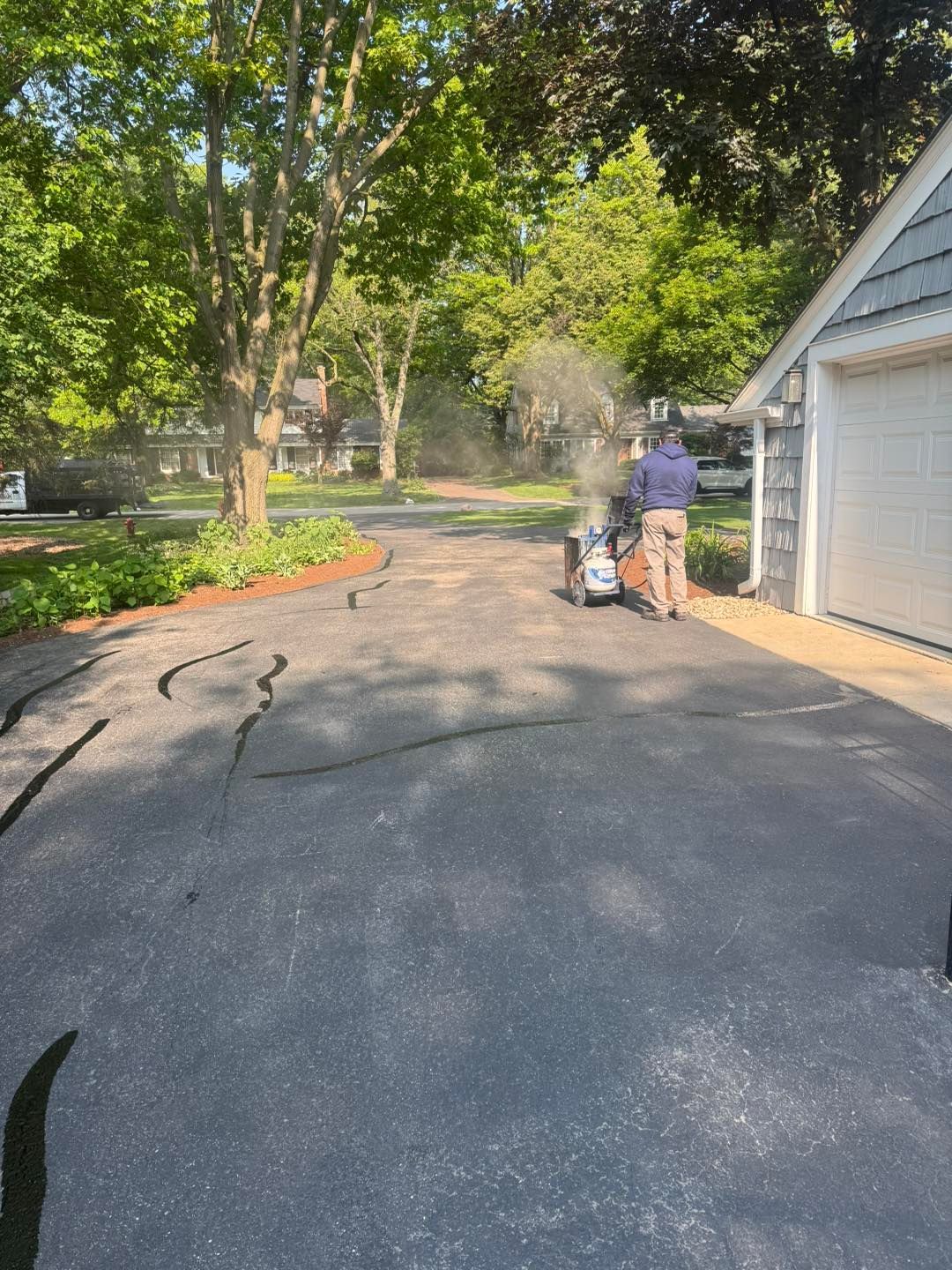
The process begins with cleaning the pavement to remove dirt, vegetation, and loose material that would prevent sealant adhesion, followed by crack filling to seal openings that allow water penetration. A coal tar or asphalt emulsion sealant is then applied in thin, even coats using squeegees or spray equipment, creating a uniform barrier that bonds to the pavement surface as it cures. This routine maintenance step reduces the rate of oxidation and moisture damage, extending pavement life and delaying the need for costly resurfacing or reconstruction.
Schedule preventative maintenance to protect your asphalt investment and reduce long-term repair costs.
What Sealcoating Prevents Long-Term
Sealcoating slows the chemical breakdown of asphalt binder caused by UV radiation, which would otherwise turn the pavement surface gray and brittle as the petroleum components oxidize and lose flexibility. The protective layer also fills minor surface voids and prevents water from seeping into the pavement structure, where it would freeze during winter and create internal cracks that eventually surface as visible damage. Without this protection, asphalt ages faster and develops the widespread cracking and raveling that signal the need for major rehabilitation.
After application, you'll notice a refreshed black finish that restores the appearance of new pavement and makes existing striping and markings stand out more clearly. The sealed surface sheds water more effectively, reducing puddle formation and preventing moisture accumulation along pavement edges where freeze-thaw damage typically begins. These improvements contribute to longer pavement life by addressing deterioration mechanisms before they progress into structural problems that require expensive intervention.
Sealcoating frequency depends on traffic exposure and climate conditions, with most residential driveways benefiting from treatment every two to three years and commercial parking lots requiring more frequent application based on vehicle volume. Properties that skip routine sealcoating often face accelerated wear patterns and higher lifetime maintenance costs compared to those that follow preventative schedules.
What Property Owners Usually Ask
Understanding when and how sealcoating works helps property owners make informed decisions about pavement maintenance timing and material selection.
What preparation is required before sealcoating?
The pavement must be cleaned thoroughly to remove dirt and debris, existing cracks are filled to prevent water infiltration, and the surface must be dry to allow proper sealant adhesion and curing.
How does Illinois weather affect sealcoating schedules?
Seasonal freeze-thaw cycles accelerate pavement aging by expanding water trapped in surface voids, making routine sealcoating critical for protecting asphalt from moisture damage that occurs during winter months in Elk Grove Village.
When is asphalt ready for its first sealcoat application?
New pavement should cure for six months to a year before sealcoating, allowing volatile oils in the asphalt binder to evaporate so the sealant bonds properly without trapping those compounds beneath the surface.
What maintains sealcoated pavement between applications?
Avoid using harsh deicing chemicals that degrade the sealant, address new cracks promptly to prevent water infiltration, and keep the surface clean to reduce abrasive wear from dirt and debris.
How long does sealcoat take to cure?
Most sealants dry to the touch within hours but require at least twenty-four hours before vehicle traffic is permitted, with full curing occurring over several days depending on temperature and humidity conditions.
Solis Asphalt Paving Inc evaluates pavement condition and recommends sealcoating intervals based on surface wear patterns, traffic exposure, and climate factors specific to your property. Contact us to discuss preventative maintenance options and schedule sealcoating service that fits your property's needs.