Surfaces Restored Without Full Replacement
Asphalt Resurfacing and Overlays in Elk Grove Village for pavement with surface wear but structurally sound base layers
Worn asphalt that still drains properly and shows no base settlement can often be resurfaced rather than removed and rebuilt. Solis Asphalt Paving Inc evaluates pavement condition in Elk Grove Village to determine when overlays provide a cost-effective alternative to complete reconstruction. Resurfacing corrects surface deterioration, improves ride quality, and restores appearance while preserving the existing structural foundation when it remains intact.
Asphalt resurfacing involves applying a new surface layer over the existing pavement after addressing localized failures and ensuring proper drainage continues. The existing surface gets milled to remove oxidized asphalt and create a profile that bonds with the overlay, or it receives a tack coat adhesive if milling isn't required based on elevation constraints. This approach extends pavement life significantly when the underlying base hasn't failed due to water infiltration or inadequate initial compaction.
Arrange an on-site evaluation to assess whether your pavement structure supports resurfacing or requires deeper intervention.
How Overlays Address Surface Deterioration
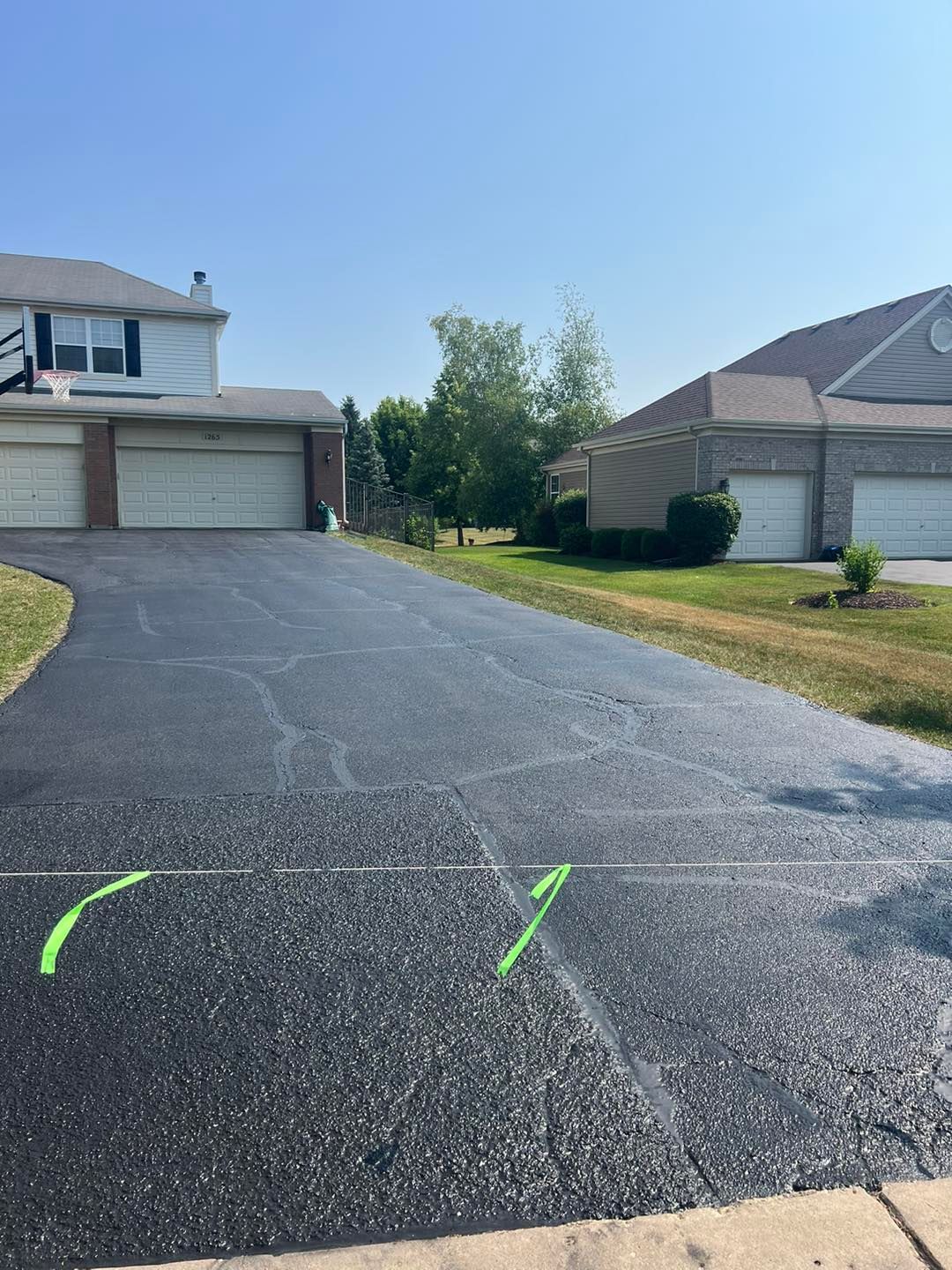
Resurfacing assessments measure pavement thickness with core samples, evaluate base stability through deflection testing, and identify areas where localized repairs must happen before the overlay application. Surfaces with widespread alligator cracking or significant rutting often indicate base failure that resurfacing alone won't correct, while oxidation, minor cracking, and surface wear respond well to overlay treatment. The evaluation determines overlay thickness based on expected traffic loads and whether milling is needed to maintain curb heights and drainage flow.
Once resurfacing finishes, you notice a smooth driving surface free of the previous roughness, restored water shedding that prevents pooling in worn areas, and darker appearance that matches newly paved asphalt. The overlay bonds to the prepared surface below and performs as a unified pavement structure rather than a temporary patch. Ride quality improves immediately as surface irregularities disappear under the new layer.
Resurfacing projects include addressing drainage concerns that contributed to the original deterioration, adjusting transition areas where the overlay meets concrete or existing pavement edges, and determining whether full-depth patching is needed in sections where the base has softened. Commercial properties often resurface parking lots in phases to maintain operational access throughout the project.
Common Questions About Resurfacing Projects
Property owners considering resurfacing typically want to understand how the process differs from complete pavement replacement and what determines suitability.
What pavement conditions make resurfacing a viable option instead of full removal?
Surfaces where the base remains stable, drainage still functions properly, and cracking is limited to surface-level deterioration rather than structural failure patterns respond well to overlays that restore functionality without excavation.
How does milling affect the resurfacing process?
Milling removes the top layer of deteriorated asphalt to maintain proper elevation relative to curbs and drainage structures while creating a textured surface that improves bond strength between the existing pavement and the new overlay.
What thickness does a resurfacing overlay typically require?
Overlay thickness depends on traffic loads and existing pavement condition, with residential driveways often receiving one and a half inches while commercial parking lots handling truck traffic may need two to three inches for adequate durability.
How long does resurfaced pavement last compared to the original surface?
When applied over structurally sound pavement, overlays in Elk Grove Village typically provide fifteen to twenty years of service life with proper maintenance, similar to new pavement construction over well-prepared base material.
What preparation work happens before the overlay gets applied?
Preparation includes repairing localized base failures, adjusting drainage structures to final grade, cleaning the existing surface, and applying tack coat adhesive that bonds the new asphalt layer to the prepared pavement below.
Solis Asphalt Paving Inc assesses pavement structure to determine whether resurfacing provides long-term performance or if underlying issues require complete reconstruction. Request a resurfacing estimate based on detailed evaluation of your current pavement condition and project requirements.