Surfaces Built to Handle Heavy Use
Asphalt Removal & Replacement in Elk Grove Village for deteriorated pavement that no longer drains properly or supports vehicle loads
Solis Asphalt Paving Inc handles asphalt removal and replacement in Elk Grove Village when surface repairs no longer address structural failures beneath the pavement. You need complete removal when the base layer has eroded, when freeze-thaw cycles have created widespread cracking that allows water infiltration, or when the existing asphalt has thinned to the point where potholes reform within weeks of patching. The new surface restores proper drainage slope and load-bearing capacity that patching cannot replicate.
This process involves removing the failed asphalt down to the base layer, evaluating whether the aggregate base requires repair or replacement, and installing new asphalt at the correct thickness for your traffic patterns. In Elk Grove Village, winter freeze-thaw cycles accelerate base layer deterioration when water penetrates through cracks, making thorough removal essential to prevent the same failure pattern from recurring within a few seasons.
Schedule a site assessment to determine whether your pavement requires full removal or if targeted repairs remain viable.
What Complete Removal Actually Accomplishes
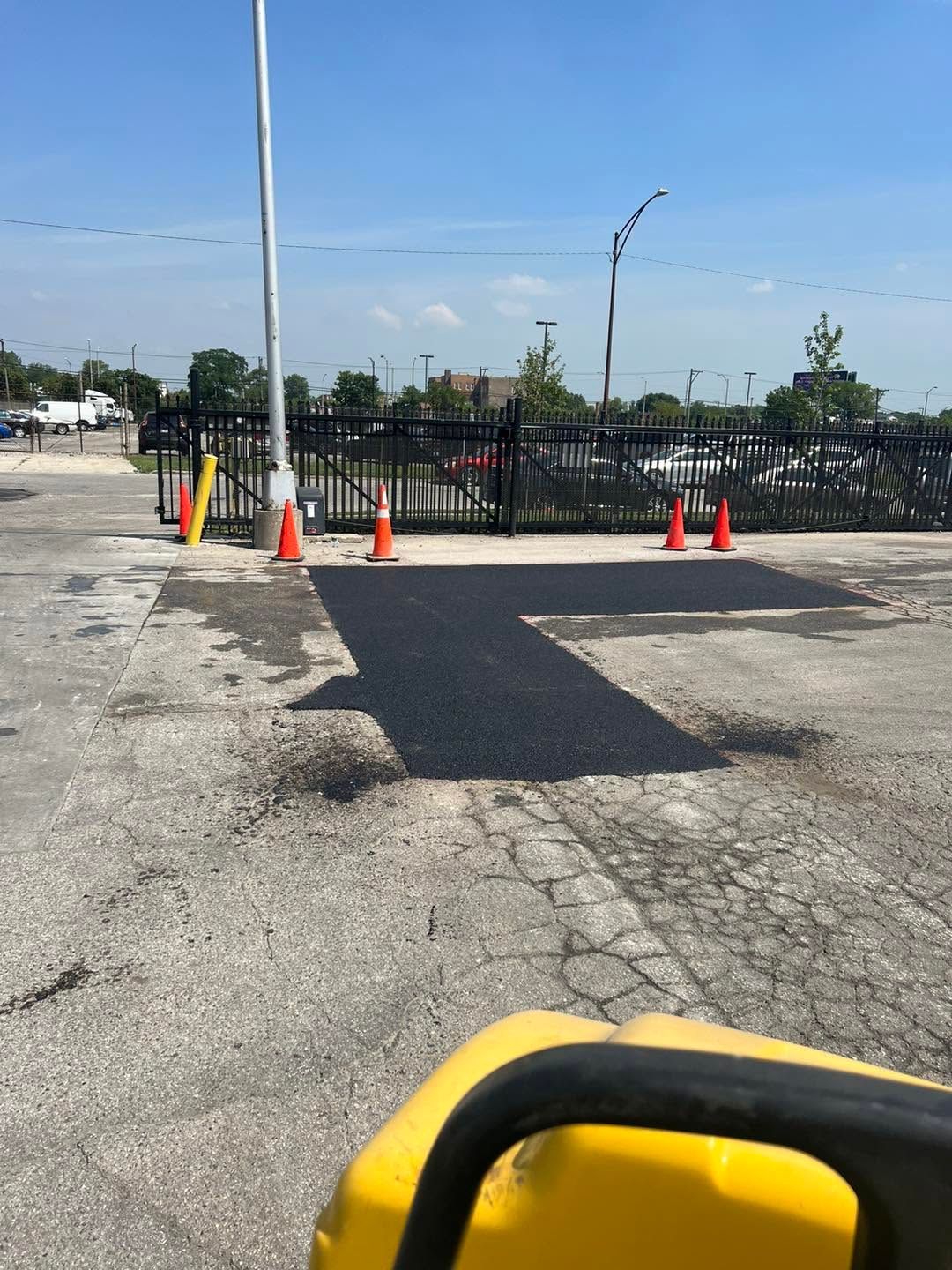
Full removal addresses problems that surface treatments cannot fix because it eliminates the compromised base material where water has pooled and weakened structural integrity. When the base layer remains saturated or has shifted unevenly, any new asphalt installed over it will crack along the same stress points within months, requiring you to pay for the work twice.
After Solis Asphalt Paving Inc completes removal and replacement, you notice that water no longer pools in the same depressions, vehicle traffic no longer causes the pavement to flex or crack at previous failure points, and the surface maintains a consistent grade that directs runoff toward drainage structures. The new installation eliminates the uneven settlement and soft spots that created the original deterioration pattern.
The scope of removal depends on how far the base failure extends beyond visible surface damage, which often reaches several feet past the last visible crack. Replacement includes compacting the base to specification, applying a tack coat for layer adhesion, and installing asphalt at a thickness suited to your expected load requirements, whether that involves passenger vehicles, delivery trucks, or heavier commercial equipment.
What to Know Before Starting
Property owners in Elk Grove Village often ask about timing, process details, and what the work involves before committing to full removal.
What determines whether I need full removal instead of resurfacing?
Full removal becomes necessary when the base layer has failed, which shows up as pavement that moves or flexes under traffic, widespread alligator cracking that indicates subsurface problems, or repeated pothole formation in the same areas despite patching. If water has infiltrated and weakened the aggregate base, resurfacing only covers the problem temporarily.
How does freeze-thaw damage affect the base layer in Elk Grove Village?
When water seeps through cracks and saturates the base material, repeated freezing expands that moisture and displaces the aggregate, creating voids that allow the asphalt above to sink and crack. Once this cycle begins, surface repairs cannot restore structural integrity because the base continues to shift beneath any new material.
What thickness should the new asphalt be for a commercial parking lot?
Commercial applications typically require at least three inches of compacted asphalt over a properly prepared base, with additional thickness needed for areas that handle delivery trucks or heavy equipment. The base layer itself must be compacted to a density that prevents future settling under your specific load conditions.
When is the best time to schedule removal and replacement?
Spring through fall provides optimal conditions for asphalt installation because temperatures remain warm enough for proper compaction and curing. Cold weather prevents the material from compacting correctly and extends curing time, which delays when you can reopen the surface to traffic.
What preparation does the site require before removal begins?
You need to clear the area of vehicles, mark any underground utilities to prevent damage during excavation, and plan for temporary access routes if the work blocks primary entrances. Removal creates significant debris volume that requires hauling offsite, so equipment access must accommodate both excavation machinery and dump trucks.
Solis Asphalt Paving Inc evaluates base conditions during the removal phase to confirm that structural issues are fully addressed before new material goes down. Request a project consultation to review site-specific requirements and establish a timeline that minimizes disruption to your operations.